
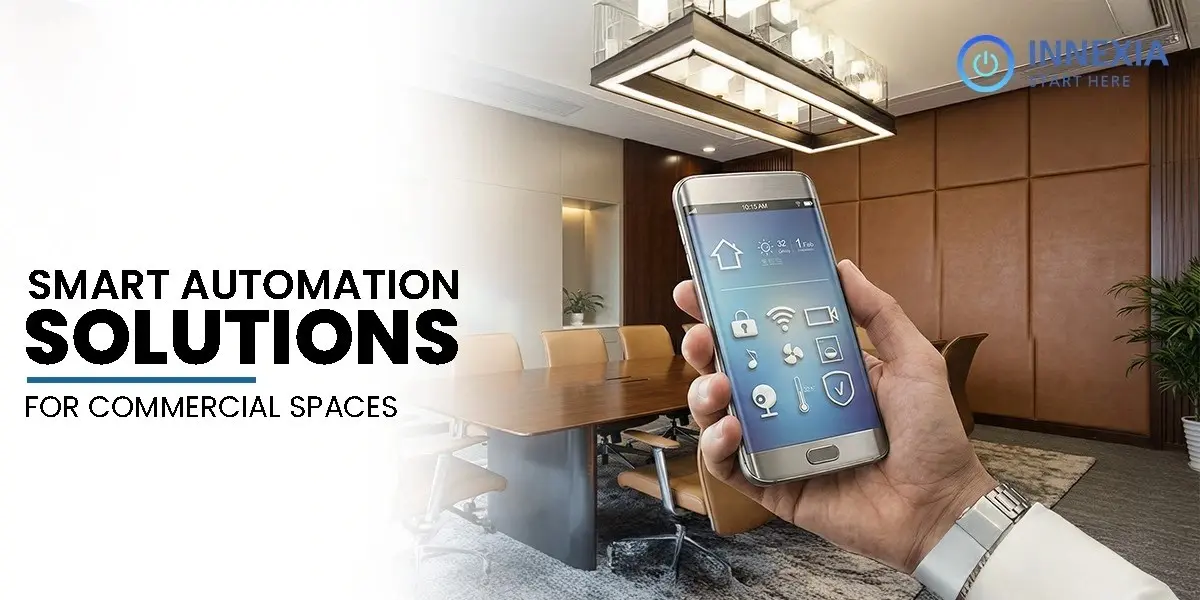
Commercial spaces in India are under pressure to do more with less. Energy bills are climbing, security expectations are higher, and employees expect workplaces that actually work for them. Smart building automation is how forward-thinking businesses are responding to all three at once.
At Innexia, we bring smart automation solutions built specifically for Indian commercial spaces, from offices and retail to large multi-floor buildings. Lighting, access control, climate, and security are all unified under one intelligent system.
This blog walks you through what smart building automation actually looks like in practice and why more businesses across India are making the shift right now.
What Is Smart Building Automation?
Smart building automation is about connecting all the major systems, lighting, air conditioning, security, and access control into one composite platform that controls them.
Rather than operating in silos, they’re integrated and intelligent. The lights turn on when you enter a room. Aircon adapts to changing conditions. Doors keep track of who comes and goes.
The key to this is the building management system (BMS), the one touchpoint that integrates, tracks, and manages. One system. Full visibility. Zero guesswork.
Key Components of a Smart Building Automation System
The key to a successful smart building automation system is its components. Here is what makes up a well-built commercial system and what each part actually does.
Sensors
Sensors are the heart of a smart building system. The sensors collect information related to temperature, humidity, the number of people present, CO₂, and light. It is from this information that the smart system is able to make decisions for itself, instead of requiring human intervention before doing something.
Controllers
Controllers take sensor data and respond to it. They control the HVAC system, lighting, and access control, and keep the desired conditions in every part of the building. They are the operational brain that comes between data and systems.
User Interface
A smart building system must have an accessible interface. Whether it’s an app, a desktop screen or an on-site interface, the user interface provides management with complete oversight and control. Here is where real-time notifications, remote controls, and system monitoring take place.
IoT Connectivity
IoT brings smart buildings together. The networked devices share information so the whole building functions as an integrated, smart system. As people leave an area, the air conditioning adjusts, the lights go down, and the access control logs the changes.
Communication Protocols
For IoT to work effectively in smart building technology, interoperability is necessary. Communication protocols include BACnet, Modbus, and LonWorks, and their importance is in enabling devices made by various vendors to communicate.
Analytics and Reporting
Our building automation system should do more than respond to data. It should help you understand it. In-built analytics reveal trends in energy consumption, identify waste, and can predict maintenance issues. Decision-making is data-driven.
Smart Office Technology and Tools
4 Key Technologies Required for the Smart Office. Each is essential in planning your office.
- Wi-Fi: In smart office environments, it is essential to have a quick and stable connection to Wi-Fi that has low latency. Emerging technologies such as Wi-Fi 6 deliver connectivity irrespective of the number of devices present in the network setting (hundreds of devices).
- Internet of Things: IoT devices installed in smart buildings gather data regarding occupancy rates, temperature control, air quality, and energy usage. All lighting systems, heating equipment, cooling systems, and ventilation systems are controlled automatically.
- AI Software: AI software processes data from IoT and makes predictions. It schedules meeting rooms and monitors working conditions while predicting potential problems in advance.
- Cloud-Based Solutions: Cloud solutions unite all other solutions into one system that can be remotely managed by building managers in real time.
Key Benefits of Smart Building Automation
Going for a smart building solution is not a technology decision. It is a business decision. Here are the benefits.
Energy Efficiency
Automated lighting and heating systems turn themselves off based on presence and weather conditions; thus, any unnecessary use of energy in vacant and cool floors is prevented. In businesses that operate between eight and twelve hours each day, energy saving is achieved fast.
Enhanced Security
The 24-hour intelligent monitoring, biometric entry control, and alarms all function separately. All activities are documented, all alarms are immediate, and your boss is always present, even when not there.
Reduced Operational Costs
More efficiency equals lower operating costs. Reduced manual labor equals reduced maintenance costs. Ultimately, smart building automation delivers a positive return on investment with its long-term cost savings of energy, labor, and maintenance.
Improved Occupant Comfort
Temperature control, lighting, and other amenities are managed automatically depending upon use and individual preference. Happy and content occupants will work better. This is not something to be overlooked.
Centralized Control
Facilities, levels, and zones under the control of one mechanism. Managers can focus on things that matter to them, instead of being worried about what doesn’t matter to them.
Challenges and Considerations
Building automation is effective, but it’s important to have expectations.
- Cost: A total building automation system is an initial capital investment. But cost savings on energy and operational expenses typically compensate for the up-front cost.
- System Complexity: An integrated system requires planning by building management, technical, and facilities teams. Skipping steps in the initial installation process is costlier later in the system’s life.
- Cybersecurity: Connected systems have security implications. Logging, encryption, and user permissions are essential. They are essential for commercial use.
Conclusion
Commercial spaces in India are moving fast toward intelligent, connected infrastructure. The question is no longer whether to automate but how well it is done and who does it.
Innexia, as a trusted building automation company in Ahmedabad, we have deployed smart building systems across offices, retail spaces, and large commercial buildings, built to perform reliably from day one.
Our systems provide integrated lighting and HVAC control, access control, and energy monitoring for Indian commercial buildings.
If you are looking to make your commercial spaces smarter, efficient, and manageable, we are here to help.