
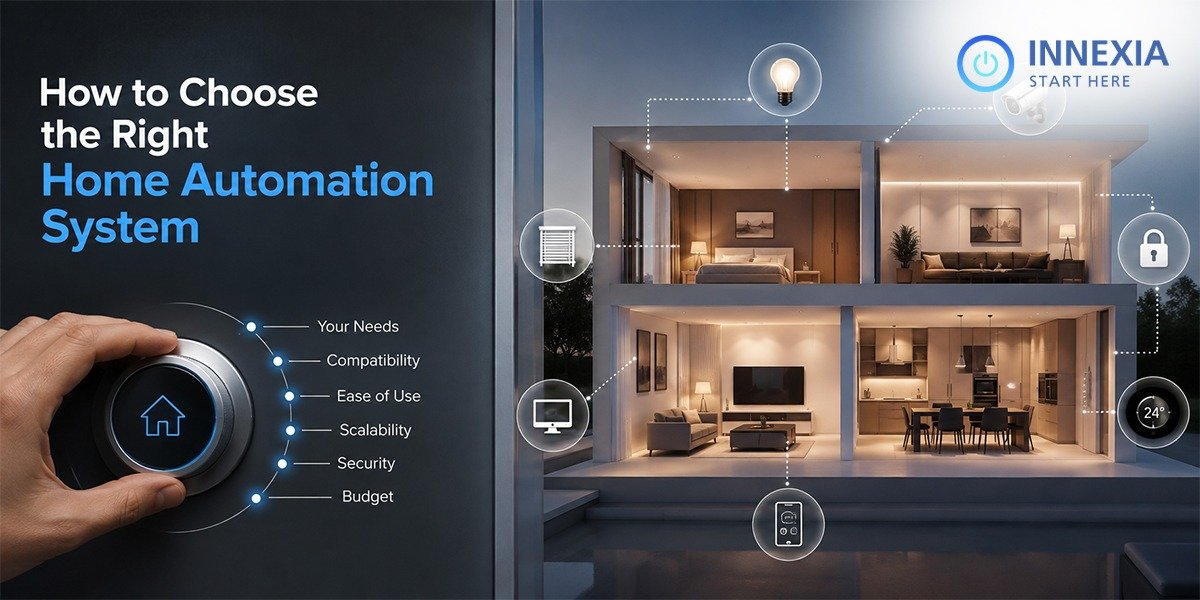
Walk into any home automation market in India today, and you will find dozens of options, wildly varying prices, and confusing technical claims. Wi-Fi versus Zigbee, app-based versus voice-based, retrofit versus new construction. It is genuinely hard to know what actually matters.
Most people choosing a home automation system in India end up focusing on the wrong things. They compare app screenshots and feature lists instead of asking whether the system will actually work in their home, with their electrical setup, and with their family. This blog walks through exactly what to check before you invest, specifically from an Indian homeowner’s perspective.
Start With Your Home, Not the Product
Before comparing brands, understand what you are actually working with.
Concrete walls are common in older Indian homes, and the existing wiring may be subpar, so Wi-Fi coverage may not be consistent from floor to floor. Even if your building is super modern, power failures and internet connection outages occur as well.
A stable electricity grid and consistent broadband availability do not exist in this market, so a home automation system that relies on them for its operations will have a hard time in this region. The first question to ask any provider is not what the app looks like; it is whether the system relies on an internet connection for simple tasks such as turning on a light, unlocking a door, or other basic actions.
Check Whether It Works Without Internet
This single factor separates systems built for India from systems simply sold in India.
There are plenty of home automation systems that depend solely on cloud connectivity. If the internet goes down, everything goes down: lights, locks, and so on. In a nation where things can go up and down with the electricity and where there are so many times when they aren’t connected, that is no minor inconvenience; it is a design problem.
Zigbee mesh technology systems address this correctly. The devices communicate locally to a hub, located within the home, and not through the cloud. No lights, locks, or schedules are impacted during an outage because they were never connected to the Internet in the first place. If you are considering smart home solutions in Gujarat, ask this question first.
Retrofit or Rewire
The second major decision point is installation type.
Some systems require significant rewiring, new conduits, and structural changes. This works well during new construction but becomes expensive and disruptive for an existing home. Retrofit systems, on the other hand, work with your existing switches and wiring. Installation typically takes a few hours, not weeks, and there is no need to break walls or redo electrical work.
For most Indian households living in existing homes, a retrofit home automation system is the more practical and cost-effective choice. Confirm with any provider exactly what installation involves before signing anything.
Look at Local Support, Not Just Product Specs
This is where many buyers get it wrong. They choose a system for the features and find that little or no support is available in their city.
Home automation products are less widely available in Tier 2 cities in India, with the majority of home automation firms that target the whole nation having a broader reach, and established home automation brands, such as the ones with high-end brands, having few showrooms and support centers in cities beyond the metros. This is a huge deal if you reside in smaller cities in the state of Gujarat, like Ahmedabad, Gandhinagar, or Surat. No matter how well the system is specified, there is nothing wrong with it if you have no local technician to call in case of a problem.
Ask specifically whether the company has physical presence and onsite installation teams in your city. A home automation company in India with proven pan-India installations and local support will save you significant frustration compared to an online-only brand.
Compatibility With Your Full Household
If you want to install smart home automation in Ahmedabad or anywhere in India, it is important to make it work for everyone living in the house and not only for the one who installed it.
The same wall switch should always be available for grandparents. Children should have simple access without carrying keys. Working professionals need remote control through an app. Domestic help may need scheduled, time-limited access. If a system only supports one control method- an app only, for example- it will create daily friction in most Indian households where multiple generations live together.
Ensure that the system is compatible with simultaneous multiple user control methods, such as voice, existing switch, mobile app, RFID, or PIN. This is the one feature that makes the difference between a system that will be used on a regular basis or between the one or two members of the family that will keep it.
Warranty and After-Sales Commitment
Home automation is not something that is bought once and never used again. It’s infrastructure that you’ll rely on for years and years, every day.
Many buyers only think about a one-time purchase and ignore what will occur when a component fails after two years. A short and/or vague warranty is often an indication that the manufacturer does not believe the product will last. Be especially alert for piece-to-piece replacement warranties, where the entire system is not replaced if there is a problem in one of the components.
A 5-year piece-to-piece replacement warranty is a clear statement of confidence in the hardware provided by a company. This confidence should play a big part in your decision.
Energy Considerations Specific to Gujarat
If you are evaluating home automation in Gujarat specifically, energy management deserves extra attention.
Gujarat’s strong solar resource combined with the state’s net metering policy and rising electricity tariffs makes energy management automation particularly valuable for homeowners in the region. A well-designed system with occupancy-based lighting, automated climate control, and consumption monitoring can meaningfully reduce your electricity bill over time, especially relevant given Gujarat’s climate and cooling demands through much of the year.
When comparing smart home solutions in Gujarat, ask whether the system includes energy monitoring features and how they integrate with your existing electrical setup, including solar if you have it.
Questions to Ask Before You Buy
Before signing any contract, get clear answers to these:
- Does the system run when the internet is down and in the event of a power outage?
- Do the installation is as retrofit or rewiring?
- What is the installation time and does the company install the equipment?
- What is the warranty period and will it include replacement of individual components?
- Does the company have a physical presence and support in your city?
- Can multiple family members control the system through different methods?
- What happens if you want to expand the system later?
Does it integrate with additional devices easily?
A provider that answers these clearly and specifically, rather than deflecting to generic marketing language, is one worth taking seriously.
How Innexia Fits Into This Decision
We built our home automation system specifically around these considerations, because we have installed it across homes in Ahmedabad, Gandhinagar, and cities throughout India and seen exactly where systems fail families.
Our platform runs on Zigbee mesh technology, so your home keeps working through power cuts and internet outages. Installation is a retrofit, completed in approximately four hours with no rewiring required. Every device supports multiple control methods simultaneously: voice, app, existing switch, and RFID, so every member of your household can use the system comfortably. And every installation includes a 5-year piece-to-piece replacement warranty, backed by a local team available for support.
Conclusion
Choosing the right home automation system in India is less about comparing feature lists and more about asking the right questions. Does it work without internet? Does it fit your existing home without renovation? Will support actually be available when you need it? Does it work for every person in your household, not just the most tech-comfortable one?
Get these fundamentals right, and the rest of the decision becomes straightforward.
At Innexia, we have spent 23 years building automation systems that answer these questions correctly. Our smart home automation in Ahmedabad is designed specifically for how Indian homes and families actually function.