
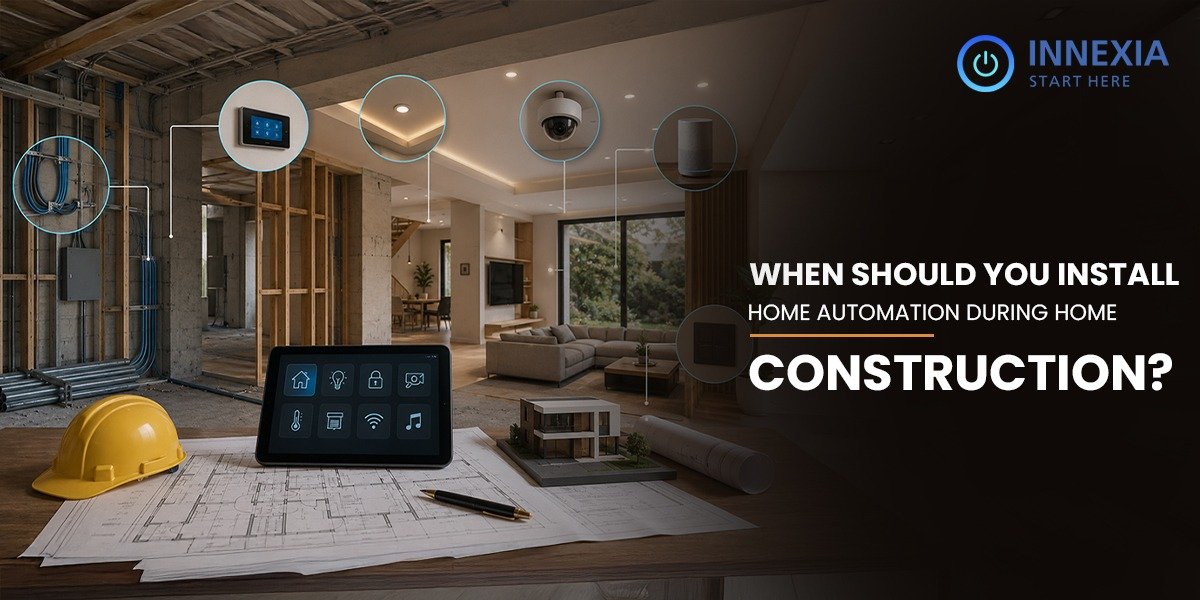
Building a new home is one of those rare moments where everything is possible. Walls are open, wires have not been hidden yet, and the layout is still a conversation rather than concrete. It is the single best window to get your home automation for new construction right, and most people miss it completely because nobody tells them when to ask.
This is that guide
The Mistake Almost Every Homeowner Makes
Most people treat smart home solutions as a finishing touch. Flooring done, paint done, furniture ordered, and then somewhere at the very end someone asks about smart lights or a video doorbell. By that point the walls are sealed, conduits are fixed, and every add-on becomes a retrofit job that costs far more than it should have.
The best time to include automation professionals is during the design phase, not after possession. That one decision changes everything about how well your home automation system performs and what it costs you over a lifetime.
The 4 Construction Stages and What to Do at Each One
Stage 1: Design Phase — Before a Single Brick Is Laid
This is where your home automation planning actually begins. Before the architect finalises the floor plan, before electricals are mapped, before anything is fixed on paper.
Bring your home automation company into the room alongside your architect. Not after. Alongside. When all three are working together from day one, the home gets designed around the technology rather than having technology squeezed into spaces it was never meant to occupy.
Decisions to make at this stage:
- Room by room automation goals
- Conduit and wiring paths across the floor plan
- Hub and smart panel placement
- Which systems will be wired vs wireless
- Network access point locations
Stage 2: Framing and Rough-In — The Golden Window
Once the structure is up and walls are open but not yet sealed, this is your golden window for residential home automation installation. Everything goes in cleanly, concealed, and exactly where it should be.
Smart lighting installation at this stage means no visible cable runs, no surface conduits, and switch placements that make sense for how you actually move through the home. Motorised curtain motors sit inside the window framework. Network cables run through walls instead of along skirting boards.
This is also where the wired vs wireless home automation decision becomes real:
Wired | Wireless | |
Reliability | Rock solid, no interference | Dependent on network strength |
Best installed | During rough-in stage | Anytime, including after possession |
Ideal for | Lights, curtains, AV, sensors | Locks, cameras, plug-in devices |
Future upgrades | Needs conduit access | Flexible, easy to add |
Aesthetics | Fully concealed | Hardware may be visible |
The best new home automation systems use both, planned intelligently from this stage itself.
Stage 3: Electrical and Civil Work — Lock In the Infrastructure
When electricians are on site is when your IoT home automation backbone needs to go in alongside them. Miss this conversation and you will be drilling finished walls later.
What to specifically discuss with your electrician at this stage:
- Smart switch gang box sizes and positions
- Dedicated circuits for high-draw automation systems
- Low voltage wiring runs for sensors and panels
- Power supply points for automated gates and smart locks
- Network points at every location that will eventually have a connected device
Every shortcut here has a price tag attached to it after possession. No exceptions.
Stage 4: False Ceiling and Finishing — Last Chance for Clean Installs
Just before false ceilings go up, your smart home design ideas need to be physically committed. This is the last window for concealed hardware.
What must go in before the ceiling closes:
- Ceiling speakers and recessed lighting circuits
- Concealed AC controller wiring
- Network access points above the false ceiling line
- Any motorised blind or curtain track mounting
Miss this window and you are either living with exposed hardware or paying for the ceiling to come down again. Neither is a good option.
Quick Reference: What to Do and When
Construction Stage | Key Actions for Home Automation |
Design Phase | Appoint automation company, plan room goals, decide wired vs wireless |
Framing and Rough-In | Run conduits, pull low-voltage wiring, place network cabling |
Electrical Work | Smart switch positions, dedicated circuits, sensor wiring |
False Ceiling Stage | Ceiling hardware, access points, test all wired runs |
Handover | Commission system, set scenes, train family on app |
What If You Already Missed These Stages?
Not every home is under construction right now. If you are moving into a finished home or already living in one, the answer is not to wait for a renovation.
Modern wireless home automation is built exactly for this situation. Retrofit systems work with your existing switches and wiring. No walls broken, no conduits needed, no electrician tearing your home apart. A relay module sits neatly behind your existing switchboard and your home becomes smart within hours.
You do not need to be building from scratch to have a genuinely intelligent connected home technology setup. You just need the right system for where you are.
The Real Cost of Getting the Timing Wrong
Retrofitting smart home solutions into a finished home costs significantly more than planning them during construction. Here is what late planning actually costs you:
- Extra labour to open and reseal finished walls
- Surface conduits and cable channels that affect aesthetics
- Compromises on device placement because the ideal spots are no longer accessible
- Longer installation timelines because work has to happen around your daily life
- Potential damage to flooring, paint, and false ceilings during rework
The construction phase is the only time you have full access, full flexibility, and zero compromise on how your smart home ecosystem is built. Once possession happens, that window closes permanently.
Plan early. Build it right. And if your home is already built, Innexia’s retrofit smart home solutions mean you still do not have to compromise on what your home can do.