
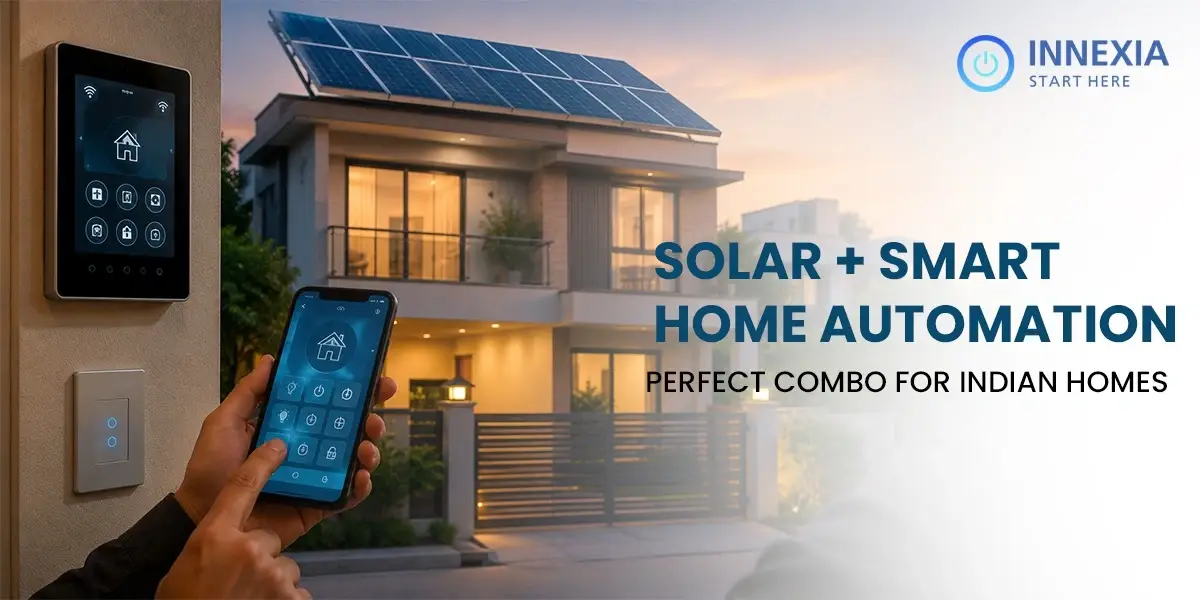
Ahmedabad summers bring scorching heat and rising electricity bills. Traditional power grids struggle during peak summer months. A solar panel system paired with a home automation system changes this completely.
Solar panels generate clean electricity directly from sunlight every day. Smart home devices control exactly how and when that power gets used. Apps run heavy appliances during peak sun hours automatically and efficiently. Intelligent sensors manage every watt with real-time precision across the entire home.
Rising electricity tariffs hurt Indian homeowners every single month. Rooftop solar offers energy freedom while smart automation reduces every unit of waste. This blog covers how the combination works, which devices fit best, how much families save, and how to get started today.
Why Are Solar and Smart Home Automation Better Together?
Solar energy provides the necessary raw fuel. Smart technology provides vital efficiency for every appliance. These systems work together beautifully for homeowners. They create a powerful and sustainable synergy today. Indian households become much more independent this way. We manage local resources better using innovation. Technology meets sustainability within our modern spaces.
- Energy Waste Elimination: Motion sensors turn off all lights automatically. They stop fans in empty rooms immediately. Retrofit modules eliminate the need for rewiring. This prevents high-energy leaks in houses. Efficiency improves with every single watt used.
- Automated Load Shifting: Smart systems schedule heavy tasks for you. They run during the brightest sun hours. This utilizes free solar power during peaks. You avoid expensive grid tariffs this way. Timing ensures maximum savings for your family.
- Maximized Self-Consumption: Use your own clean power first, always. Solar batteries store your excess daily energy. Smart apps track every single generated unit. Control stays in your own hands daily. Clean energy powers your entire modern smart home.
How Does a Solar-Powered Smart Home Actually Work?
A smart home possesses a digital brain. This serves as the central nervous system. It manages all complex power flows effortlessly. Hardware drives your sustainable lifestyle goals daily. Intelligent systems ensure long-term reliability always. Cloud-based apps provide you with total control.
Analytics optimize your daily energy yields perfectly. Weather forecast integration helps the system plan. It predicts sun levels using real-time data. This keeps the home efficient and resilient. AI-driven load management adapts to your needs. It adjusts power distribution in milliseconds.
Smart energy management creates a balanced grid. Homeowners monitor production through unified dashboards. Sensors communicate using advanced BLE Mesh technology. This eliminates the need for complex internal wiring. Systems respond to voltage fluctuations automatically. Every watt remains under your complete control.
Modern inverters forecast yields based on cloud movements. AI predicts your next electricity bill with accuracy. Load shifting happens without any user intervention. The system prioritizes critical loads during grid failures. This ensures your internet and lights stay on. Smart homes represent a leap toward energy independence.
The Solar Array Photovoltaic panels sit securely on Indian roofs. Cells capture bright sunlight. Electrons move rapidly within these advanced modules. This process creates usable green power. This generates abundant and clean solar energy.
The Smart Inverter Enphase microinverters convert power under each panel. They change DC into safe AC electricity. Your home appliances run on this AC power directly. These units connect directly to the cloud. You track performance through a mobile app. AI algorithms manage the load distribution instantly.
The Battery Reservoir lithium-ion batteries hold extra electricity for night use. They provide reliable power during the night. They maximize your own self-consumption rates daily. These batteries protect against sudden grid outages. Backup modes activate instantly during power failures.
What Smart Home Devices Work Best With a Solar Panel System?
Certain appliances maximize your solar benefits effectively. These smart home devices work best together. They use power very efficiently every day. Integration helps your specific solar panel system. It lowers your monthly bills significantly now.
|
Device Category |
Solar Synergy Benefit |
Energy Saving Impact |
|
Smart ACs |
Cools rooms during peak sun hours. |
Cuts bills by 35%. |
|
BLDC Fans |
Runs on low DC power daily. |
Lowers total grid demand. |
|
Water Heaters |
Heats water at midday automatically. |
Saves 50% on energy. |
|
Security Cameras |
Operates completely off-grid with dedicated panels. |
Provides 24/7 off-grid security. |
Smart plugs also help your Indian home. They convert regular appliances into smart ones easily. Automated blinds block harsh summer heat effectively. This reduces the cooling load on your AC.
How Much Can Indian Homeowners Save by Combining Solar and Smart Home Automation?
Savings start with much lower monthly bills. Most Indian homes save a quarter of their electricity every month. This comes from robust smart home automation. You eliminate all power waste using intelligent sensors. Real-time tracking helps you build better habits. It stops “ghost energy” usage in every room. Every rupee stays in your family budget now.
Your property value increases significantly as well. Eco-conscious buyers want these modern, sustainable assets. Install solar panels for home use today. This makes your property a premium luxury asset. Buyers seek energy-efficient spaces in metro cities. Investment returns look very strong for Indian owners.
The break-even point occurs in six years. The PM Surya Ghar Yojana helps you greatly. You get a ₹78,000 subsidy for 3kW systems. This significantly lowers your initial investment cost. Clean power becomes free after the payback period.
Solar panels cut your dependence on the grid fast. Your monthly electricity bill drops every single month. Clean energy pays for itself over time. Your monthly bills drop, and your savings grow every year.
How Do You Get Started With Solar Smart Home Automation in India?
You can upgrade your current Indian home easily. You fit retrofit modules behind your existing switchboards. This eliminates the need for major rewiring. Existing homes gain modern smart features fast.
Energy Assessment
Evaluate your monthly power consumption patterns carefully. Decide how much load to offset now. Consider your peak usage during the summer months.
Expert Consultation
Talk to solar professionals in your city today. They analyze your roof orientation and shading. Get a custom design for your specific roof.
Device Selection
Choose compatible smart home devices for your system. Verify app integration options for your smartphone. Select appliances that handle heavy electrical loads.
Professional Installation
Install panels and high-efficiency microinverters securely. Technicians connect sensors and controllers safely. Quality construction protects your new tech investment.
App Configuration
Connect your new solar power system to WiFi. Set up your automation rules in the app. Monitor your clean energy from anywhere. Test every scene for total comfort and efficiency.
Conclusion
Smart home automation and solar energy together give Indian homeowners real control over their energy and their expenses. Every unit of solar power generated gets used more intelligently when smart devices manage consumption automatically. That combination delivers comfort, savings, and sustainability every single day.
Indian homes deserve technology built for Indian conditions. Rising electricity costs and long summer months make this upgrade a practical decision for every household. The right system pays for itself while making daily life more comfortable.
Innexia brings together smart home automation and solar-ready solutions designed specifically for Indian homes. From Ahmedabad to across the country, Innexia helps families make the shift to smarter, greener living.
Contact Innexia today and take the first step toward energy independence.